

Two products.
One set of rules.
Antevra and Actora are sold separately and built to the same four rules. Each rule is enforced in code, and we will show any of them working.

- Nothing is overwritten
- Every act is attributed
- A person signs
- Configuration, not code
Four stones, each a rule
Nothing is overwritten
Antevra’s decisions are append-only and its sources immutable revisions. Actora’s clinical tables accept only appends or permitted state changes, enforced by database triggers.
Every act is attributed
Each action carries a named person and server time. In Actora, an unaudited clinical write is rejected by the database.
A person signs
Antevra’s export gate, Actora’s signatures and data lock: no administrator can skip them, and signing asks you to authenticate again.
Configuration, not code
A new protocol or customer never needs its own code branch. Subjects stay pinned to the protocol version they started on.
The engines, exploded
As you scroll, each engine’s stack separates into its layers. Every stage that calls a model is marked with the star.
Antevra
- calls a model Ingest and extract: the protocol becomes a typed design, every value cited
- Readiness: facts, evidence rules, conflicts, routing, gate, pack
- Generate and validate: synthetic SDTM from a seed, repair held for a human
- Assurance: Context of Use and the credibility dossier
- calls a model Model seam: Claude API, Claude Code CLI, or a model you host
Actora
- Thirteen apps on one database, 43 server modules
- Same-transaction audit; event time and server time on every event
- DML-only application role; append-only and transition-only triggers
- Hash-chained audit with a commit-time guard
- A separate blinding database; every reveal logged
AI, fenced in:
what is true today
| Antevra | Actora | |
|---|---|---|
| Where AI is used | Extraction, review findings, repair proposals, anomaly detection | An in-app assistant answering with citations to approved help topics |
| Control | The model proposes; rules can only downgrade; a person decides; export is gated | Cited help answers and a confidentiality guard; data mode paused until a live evaluation |
| Provenance | Every stage records the model that answered | Each turn can be replayed |
| Not claimed | No accuracy figure; no training on customer data | No AI decisions on clinical data |
Your data stays yours,
and stays separate
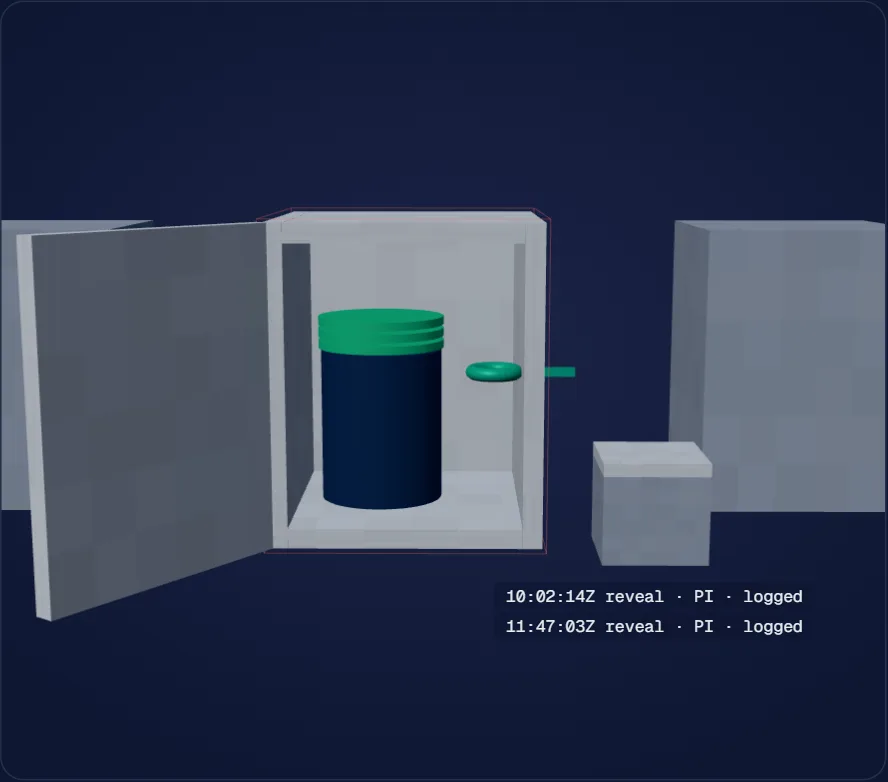
- Antevra holds no patient dataBy design: protocols, documents and synthetic data only.
- Your own instance. Nothing shared.Each Actora customer has its own application and its own database. Hosting in India is supported.
- Sign in through your own identity providerSingle sign-on and MFA through your identity provider. Signing a record asks you to authenticate again. One sealed break-glass account.
- The application can add, never reshapeThe application role cannot change the schema. Clinical records accept only additions or permitted changes of state.
- Blinding codes kept apartRandomization lists and treatment codes live in a separate database, and every reveal is logged.
- A clinical write needs its audit trailThe audit trail is chained, and the database rejects a clinical write that arrives without its audit row.
- Access leaves evidenceRequests are logged, sessions are bound to the client that opened them, and unusual access is flagged and acknowledged on the record.
Designed to connect
Three versioned contracts are designed: protocol design into Actora, dry-run simulation, and demo or training data. One is specified; none is built yet. We will say “connected” only when it is.
Antevra Built and demonstrable. A full Reviews analysis takes 20 to 40 minutes.
Actora Built from the first volunteer to the e-signed data lock; design-partner pilot, three places. The clinical expert walkthrough has not been held yet.
Actora is built for 21 CFR Part 11, EU Annex 11, ALCOA+, ICH E6(R3) and CDSCO controls, and ships a validation pack. Compliance belongs to your validated installation and SOPs. What we claim, and what we do not